

Anxiety can affect sleep, concentration, work, studies, and relationships.
Depression may change a person’s energy, motivation, mood, and interest in daily activities.
Panic attacks can create intense fear and physical discomfort.
Ongoing emotional stress can make ordinary responsibilities feel difficult.
One question often comes up when these problems begin:
“Should I see a psychologist or a psychiatrist?”
Many people in Pakistan are unsure about the difference between these two professionals.
Both work in mental health care. Their education and professional roles are different. The type of treatment they provide can also vary.
Understanding the difference can make it easier to find appropriate support.
What Does a Psychologist Do?
A psychologist works mainly with psychological and emotional concerns.
Thoughts, feelings, behaviours, and personal patterns can become part of psychological treatment.
Psychologists may provide psychotherapy for anxiety, depression, trauma, stress, low self-esteem, relationship difficulties, and behavioural concerns.
Their area of practice depends on professional education, training, experience, and specialization.
Consider a person who often thinks:
“I am not good enough.”
Low confidence can develop around this belief.
Social situations may start feeling uncomfortable.
Conversations might be analysed repeatedly after they happen.
Reassurance from friends or family may become increasingly important.
Therapy can help the person examine these patterns.
A psychologist may explore the connection between thoughts, emotions, and behaviour. Coping skills can be developed during treatment. Healthier responses to difficult situations can be practised.
What Does a Psychiatrist Do?
A psychiatrist is a medical doctor who specializes in mental health.
Medical education allows psychiatrists to assess psychiatric conditions from a medical perspective.
Physical health and medical history can be considered during an assessment.
Medication can be prescribed when it is clinically appropriate.
Psychotherapy may also be provided by some psychiatrists. The amount of therapy offered depends on the practitioner’s training and area of practice.
Severe depression can require psychiatric assessment.
Significant mood changes may need specialist attention.
Psychotic symptoms require professional evaluation.
Complex psychiatric conditions may involve medical treatment.
Daily functioning provides useful information during an assessment.
Work performance may decrease.
Sleep can become seriously disturbed.
Relationships may experience strain.
Basic routines can become difficult to maintain.
A psychiatric appointment does not automatically result in medication. Treatment decisions depend on symptoms, medical history, individual needs, and professional assessment.
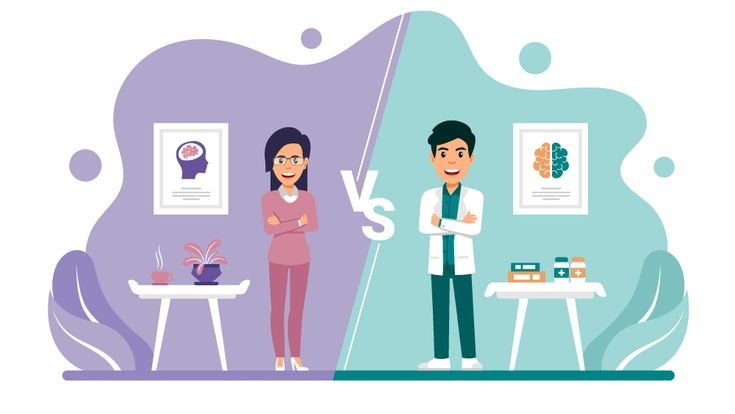
Psychologist vs Psychiatrist: The Simple Difference
The main distinction can be seen in their areas of work.
| Psychologist | Psychiatrist |
|---|---|
| Focuses mainly on psychological treatment | Medical doctor specializing in mental health |
| Provides psychotherapy | Can prescribe medication |
| Works with thoughts, emotions, and behaviours | Can assess medical and psychiatric factors |
| May conduct psychological assessments | Can manage psychiatric medication |
| Often works on emotional and behavioural patterns | May focus on diagnosis and medication management |
Professional roles can vary according to local regulations.
Licensing requirements may differ between countries.
Training pathways are not identical.
Specializations can vary from one practitioner to another.
Checking professional qualifications is an important part of choosing mental health care.
When Should You See a Psychologist?
Emotional difficulties can be a valid reason to seek psychological support.
Frequent overthinking may interfere with normal activities.
Persistent anxiety can make everyday situations difficult.
A breakup may leave someone struggling emotionally for a long time.
Repeated arguments can place pressure on a marriage.
Low self-esteem may affect personal decisions and relationships.
Past trauma can continue to influence emotions and behaviour.
Work responsibilities may feel overwhelming.
Academic pressure can become difficult to manage.
Family responsibilities may create emotional strain.
Repeated behavioural patterns can be difficult to understand.
A person may simply feel emotionally different without knowing the reason.
Possible reasons for consulting a psychologist include:
- Frequent overthinking
- Persistent anxiety
- Relationship difficulties
- Marriage problems
- Difficulty managing emotions
- Low self-esteem
- Trauma-related distress
- Work pressure
- Academic stress
- Family difficulties
- Repeated unhealthy patterns
- Ongoing emotional distress
Therapy does not require a person to wait for a crisis.
Support can be useful during difficult periods of life. Coping skills can be developed during sessions. Emotional patterns can become easier to recognize. Personal difficulties can be discussed in a structured setting.
When Might a Psychiatrist Be More Appropriate?
Severe or complex symptoms may require psychiatric assessment.
Someone experiencing severe depression may need medical evaluation.
Major mood changes can require specialist attention.
Psychotic symptoms need professional assessment.
Certain psychiatric conditions may involve medication.
A psychiatrist can review symptoms during an appointment.
Medical history can provide important information.
Physical factors may also need consideration.
Medication can become part of the treatment plan when clinically appropriate.
A psychiatric consultation does not guarantee a prescription.
The treatment plan depends on the person’s condition and professional assessment.
Can You See Both?
Support from both professionals is possible.
Psychotherapy and psychiatric treatment can address different aspects of the same problem.
Medication management may be handled by a psychiatrist.
Regular psychotherapy may be provided by a psychologist.
Communication between professionals can support coordinated care when both forms of treatment are needed.
Consider someone experiencing severe anxiety.
Overwhelming symptoms may require psychiatric attention.
Medication can be considered when clinically appropriate.
Therapy can examine anxiety triggers and emotional responses.
Unhelpful thoughts can be identified during psychological treatment.
Coping strategies can be practised during therapy sessions.
Each form of care can serve a different purpose within the treatment plan.
What About Anxiety and Depression?
Anxiety does not affect everyone in the same way.
Depression can also vary in severity and symptoms.
Psychotherapy may help a person manage emotional difficulties.
Medication may be considered when symptoms require medical treatment.
Certain individuals may benefit from both approaches.
There is no fixed rule that says:
“Depression = psychiatrist.”
Depression can involve different levels of severity and different treatment needs.
There is no fixed rule that says:
“Anxiety = psychologist.”
The appropriate professional depends on the person’s symptoms and circumstances.
Severity can influence treatment decisions.
Daily functioning provides another important indication.
Personal needs deserve consideration.
Professional assessment can help identify suitable care.
What If You Don't Know Which One You Need?
Self-diagnosis is not necessary before seeking professional support.
A qualified mental health professional can listen to the concerns and assess the situation.
Changes in sleep can be important.
Work performance may reveal the effect of emotional distress.
Relationship problems can show how symptoms are affecting daily life.
Academic performance may change during periods of emotional difficulty.
Loss of interest in normal activities deserves attention.
Persistent changes in mood or behaviour should not be ignored.
A professional assessment can help identify possible treatment options.
The first appointment can simply involve explaining what has been happening.
A Common Myth in Pakistan
Mental health care is surrounded by misconceptions in Pakistan.
One common belief is:
“Only people who are mentally ill need a psychologist or psychiatrist.”
People seek psychological support for many reasons.
Grief can become difficult to process.
Relationship problems may create emotional pressure.
Career concerns can cause uncertainty.
Family conflict can affect emotional wellbeing.
Work pressure may become overwhelming.
Personal difficulties can affect confidence.
Major life changes can create emotional challenges.
Personal growth can also become a reason to seek therapy.
Seeking professional support does not mean a person is weak.
The word “crazy” does not accurately describe someone receiving mental health care.
Recognizing emotional difficulties can be an important step toward addressing them.
So, Which One Do You Actually Need?
The answer depends on the person’s situation.
Psychological therapy may be suitable for someone who needs support with thoughts, emotions, behaviours, relationships, or difficult life experiences.
Psychiatric assessment may be needed when symptoms are severe, complex, or potentially require medication.
Some people may benefit from both professionals.
Professional qualifications deserve attention when selecting a provider.
Education, training, specialization, and licensing can vary between practitioners.
Social media cannot provide an individual clinical assessment.
Online searches cannot determine the correct treatment for a specific person.
A qualified professional can assess the situation directly.
Final Thought
Psychologists and psychiatrists have different roles within mental health care.
Psychologists primarily work with psychological processes, emotions, behaviours, and psychotherapy.
Psychiatrists are medical doctors who specialize in mental health.
Medication can be prescribed by a psychiatrist when clinically appropriate.
Psychological therapy can be provided by a qualified psychologist.
Some situations may require psychological treatment.
Certain cases may require psychiatric assessment.
A combination of both forms of care can be suitable for some individuals.
Symptoms, severity, personal circumstances, and professional assessment can guide the treatment process.
Seeking support does not require a person to wait until life becomes unbearable.
You do not need to diagnose yourself before asking for help. A qualified mental health professional can help you understand your situation and identify an appropriate form of support