

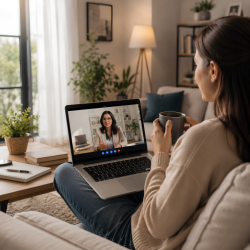
Talking to a psychologist through a phone or laptop can feel unfamiliar for many people in Pakistan. Personal concerns may seem easier to discuss during a face-to-face appointment. A digital screen can create doubts about privacy, communication, treatment quality, and emotional connection.
Many people considering therapy have questions about the online format. Research has produced encouraging findings about therapist-supported psychological treatment delivered through the internet. Studies involving internet-based cognitive behavioral therapy, known as CBT, have reported outcomes comparable to face-to-face CBT for several mental health conditions.
Treatment outcomes can vary between individuals. The type of psychological concern can affect the results. A person’s needs, the psychologist’s qualifications, treatment approach, privacy, and comfort with digital communication can influence the experience.
Online therapy can provide meaningful support for many people. Certain situations may require another form of professional care.
What Exactly Is Online Therapy?
Online therapy provides psychological treatment through digital communication. A client can communicate with a qualified psychologist without travelling to a physical clinic.
Video sessions are commonly used by online therapy services. Voice sessions provide another option for some clients. Secure digital platforms may be available through specific providers.
Professional online therapy involves more than receiving general advice through the internet. Psychological assessment can form part of the process. A psychologist may explore symptoms, identify patterns, introduce therapeutic techniques, and create a treatment plan.
Regular appointments can provide structure during treatment.
People searching for online therapy in Pakistan may consider this option when travelling to a clinic creates difficulties.
Is Online Therapy Actually Effective?
Research supports online psychological treatment for several common mental health concerns.
Systematic reviews have examined therapist-supported internet-based CBT. Findings have shown outcomes comparable to face-to-face CBT in many circumstances. Such evidence indicates that meaningful psychological treatment can take place through an online format.
The level of professional involvement matters.
Reading mental health information online does not provide the same support as working with a psychologist. A mental health application may provide educational material, exercises, or general information.
Therapist-supported treatment involves direct professional interaction. Feedback can be provided during sessions. Progress can be monitored throughout treatment. Psychological techniques can be explained according to the client’s needs.
Long-term outcomes have also been studied. Internet-based CBT has shown encouraging results, although treatment adherence can differ between online and in-person care.
Some clients may attend face-to-face sessions more consistently. Therapist guidance can improve participation when compared with completely self-guided programs.
Online therapy may be suitable for depression, anxiety, stress, relationship difficulties, and other concerns that can be addressed through psychotherapy.
A qualified psychologist can assess whether this approach is appropriate for the individual.
What About Patients in Pakistan?
Mental health services are not equally available throughout Pakistan.
Larger cities such as Lahore, Karachi, and Islamabad have more mental health professionals. Smaller cities and rural communities may have fewer specialists. Finding a professional with experience in a specific concern can become difficult outside major urban areas.
Travel can create another barrier. Clinic appointments may require transportation and time away from work or education. Family responsibilities can make regular visits difficult.
Remote sessions can reduce some of these practical problems.
A Karachi study examined the experiences of 49 people who received tele-mental health services, including telepsychiatry and telepsychotherapy. Participants reported benefits involving convenience, travel, and waiting time. Reduced stigma was identified as another benefit by some participants.
Stigma can influence decisions about psychological treatment in Pakistan.
Visiting a psychologist may feel uncomfortable for someone worried about social judgment. Family reactions can create another source of hesitation.
A private online appointment may feel easier for certain clients. Speaking from home can remove the need to travel to a clinic.
Personal circumstances still matter. A shared home may not provide enough privacy for an online session.
But Online Therapy Is Not Perfect
Online therapy has limitations.
Privacy can become difficult when several people share a home. Sensitive topics may be harder to discuss when relatives are nearby. Household interruptions can affect communication during a session.
Technical problems create another difficulty. Weak internet connections may interrupt conversations. Poor audio or video quality can reduce the comfort of the session.
Digital skills can influence the experience. Some clients use online platforms comfortably. Other people may need time to become familiar with digital tools.
Cost can affect access to treatment. The relationship between psychologist and client remains important as well.
A quiet room can provide greater privacy. Headphones may help when appropriate. Reliable internet can reduce technical interruptions.
Face-to-face therapy may feel more comfortable for certain individuals.
Personal preference deserves consideration. Online therapy does not need to replace in-person treatment for every client.
Who Can Benefit From Online Therapy?
People living far from mental health services may find remote support useful. Travel can be difficult for individuals with demanding jobs, academic commitments, family responsibilities, or limited transportation.
A familiar home environment may feel more comfortable for some clients. Another person may prefer the structure of a physical clinic.
Online therapy may be considered for concerns such as:
- Depression
- Anxiety
- Stress
- Relationship difficulties
- Emotional concerns
- Other problems suitable for psychological therapy
A university student in Islamabad may have little time for weekly travel. An online appointment can fit more easily into a busy academic schedule.
A working professional in Karachi may have limited availability during clinic hours. Remote sessions can provide another option for maintaining regular appointments.
Someone living in a smaller city may have difficulty finding a psychologist with experience in a specific area. Online services can expand access to professionals outside the person’s immediate area.
For these clients, online counseling in Pakistan can provide a practical route to psychological support.
How Can You Make Online Therapy More Effective?
Client participation can influence the therapy experience.
1. Choose the Right Psychologist
Professional qualifications should be reviewed before treatment begins.
Education, experience, specialization, and professional background can help a client evaluate a psychologist. Information about treatment methods can provide additional clarity.
Social media popularity does not determine clinical expertise.
Ask about experience with the type of concern you want to address. Clear information can make the selection process easier.
2. Create a Private Environment
Privacy supports open communication during therapy.
A quiet room can reduce distractions. Headphones may provide additional privacy when suitable. Household members should know that the appointment requires uninterrupted time.
The device should be placed somewhere comfortable. A reliable internet connection can make communication easier.
3. Be Honest
Open communication is an important part of psychological treatment.
You do not need to describe your entire life during the first appointment. Important symptoms and concerns should be explained honestly.
The psychologist uses this information to understand your situation. Treatment decisions become easier when the professional has an accurate picture of your difficulties.
Questions about therapy can be discussed during sessions. Concerns about a particular technique can be communicated openly.
4. Give Therapy Time
Psychological treatment usually requires more than one conversation.
A single appointment may provide useful insight. Meaningful change often requires regular sessions and practice.
Treatment duration varies between individuals. Some people may need short-term support. Other situations may require longer treatment.
Regular attendance allows the psychologist to monitor progress and adjust the treatment approach when needed.
5. Ask Questions
Clients should understand the treatment they receive.
A psychological technique may seem confusing during the first explanation. Asking about its purpose can make the process clearer.
Progress can be discussed during appointments. Discomfort with an approach should not remain unspoken.
Open communication can strengthen trust between the client and psychologist.
Online Therapy vs Face-to-Face Therapy: Which Is Better?
No treatment format works equally well for every person.
Online therapy may provide convenience for someone with limited access to local services. Face-to-face treatment may feel more natural to a client who prefers direct interaction.
Research on therapist-supported online CBT has found outcomes comparable to face-to-face CBT in many situations.
Treatment format requires individual consideration.
The person’s psychological condition matters. Personal preference has value. Privacy affects online sessions. Access to qualified professionals can influence the decision. Consistent attendance remains important.
A useful question is:
“Which form of therapy gives me a realistic opportunity to receive appropriate and consistent professional support?”
The answer can differ between individuals.
What If You're Still Unsure?
Uncertainty is common before starting therapy.
Complete confidence is not required before contacting a psychologist. An initial conversation can provide information about the treatment process.
Explain your concerns during the first discussion. Ask about session length, treatment methods, privacy, fees, and appointment frequency.
The psychologist can discuss whether online treatment appears suitable.
Some situations require an in-person assessment. Mental health emergencies require immediate local medical or emergency support.
Safety should guide the choice of treatment.
Final Thoughts
Online therapy has become an accessible way for many people to receive psychological support.
Research has produced encouraging evidence for therapist-supported online psychological treatments. Internet-based CBT can provide outcomes comparable to face-to-face CBT in several situations.
Pakistan has additional access challenges. Travel can make appointments difficult. Waiting time can create inconvenience. Social stigma may discourage some people from visiting a psychologist.
Privacy requires attention during remote sessions. Technical problems can interrupt communication. Cost may affect access. The relationship between psychologist and client remains an important part of treatment.
Someone thinking, “I need help, but I don’t know whether online therapy will work for me,” does not need to answer every question alone.
A qualified psychologist can discuss available options and help identify an appropriate form of support.
People searching for online counseling in Pakistan can explore professional psychological services through Healing Talks.
Mental health support can take place in a clinic or through a secure online session. The suitable choice depends on individual needs, safety, privacy, professional guidance, and access to appropriate treatment